DHA and Sunless Browning: FDA Safety Rules Explained
Many consumers look for ways to obtain a tanned appearance without exposure to sunlight or ultraviolet radiation. While some people encounter unregulated, unapproved peptide products online like melanotan, topical sunless cosmetics offer a completely different regulatory profile. Understanding how federal authorities monitor cosmetic browning agents helps consumers evaluate the safety rules and practical restrictions established for products containing dihydroxyacetone (DHA).
How Does the FDA Define Sunless Tanners and Bronzers?
Neither the laws nor the regulations enforced by the Food and Drug Administration (FDA) legally define the terms "sunless tanner" or "bronzer." Instead, the FDA recognizes sunless tanner as a term that typically describes products providing a darkened appearance without requiring exposure to natural sunlight or artificial sources of ultraviolet radiation.
Most sunless tanners rely on dihydroxyacetone (DHA), an ingredient that produces color by chemically reacting with amino acids located on the skin's surface. In contrast, "bronzer" is commonly applied to cosmetics designed for a temporary effect, such as brush-on powders or tinted moisturizers. Unlike DHA-based browning preparations, bronzers produce a surface coloration similar to makeup that simply washes off over time. You can learn more about how topical options differ from unapproved injectables in our overview of safer alternatives to melanotan.
What Are the Legal Restrictions on Dihydroxyacetone?
Under Section 721 of the Federal Food, Drug, and Cosmetic Act (FD&C Act), color additives—apart from coal-tar hair dyes—are strictly regulated regarding their uses and limitations. These rules are codified in Title 21 of the Code of Federal Regulations (21 CFR), beginning at Part 70. If any color additive is used outside the boundaries authorized by regulation, it is classified as unsafe under federal law, which renders the cosmetic adulterated.
DHA is formally listed as a color additive for imparting color to the human body, but under 21 CFR 73.2150, its permissible use is strictly restricted to external application. According to 21 CFR 70.3v, "externally applied" cosmetics are defined as those:
- Applied solely to external parts of the human body
- Not applied to the lips
- Not applied to any body surface covered by mucous membrane
Furthermore, under 21 CFR 70.5a, no color additive can be included in cosmetics designed for the area of the eye unless specifically authorized. DHA is not approved for use in the eye area. The agency defines the area of the eye under 21 CFR 70.3s as the circumference of the supra-orbital ridge down through the soft tissue inside the perimeter of the infra-orbital ridge, including eyebrows, eyelids, eyelashes, eyeball, and conjunctival sac. The cosmetics industry has not submitted safety data to the FDA to support approving DHA for exposure to the eye area, lips, or mucous membranes, as noted in the FDA guidance on Sunless Tanners & Bronzers.
Regulatory standards also impose strict physical specifications on the chemical purity of DHA under 21 CFR 73.1150 and 73.2150. For example, volatile matter must not exceed 0.5 percent when measured at 34.6 degrees centigrade for three hours at a pressure of not more than 30 mm. mercury (a unit of atmospheric pressure, not an ingredient). Certain mineral impurities are restricted to minuscule thresholds measured in parts per million.
Is DHA Approved for All-Over Spray Tanning Booths?
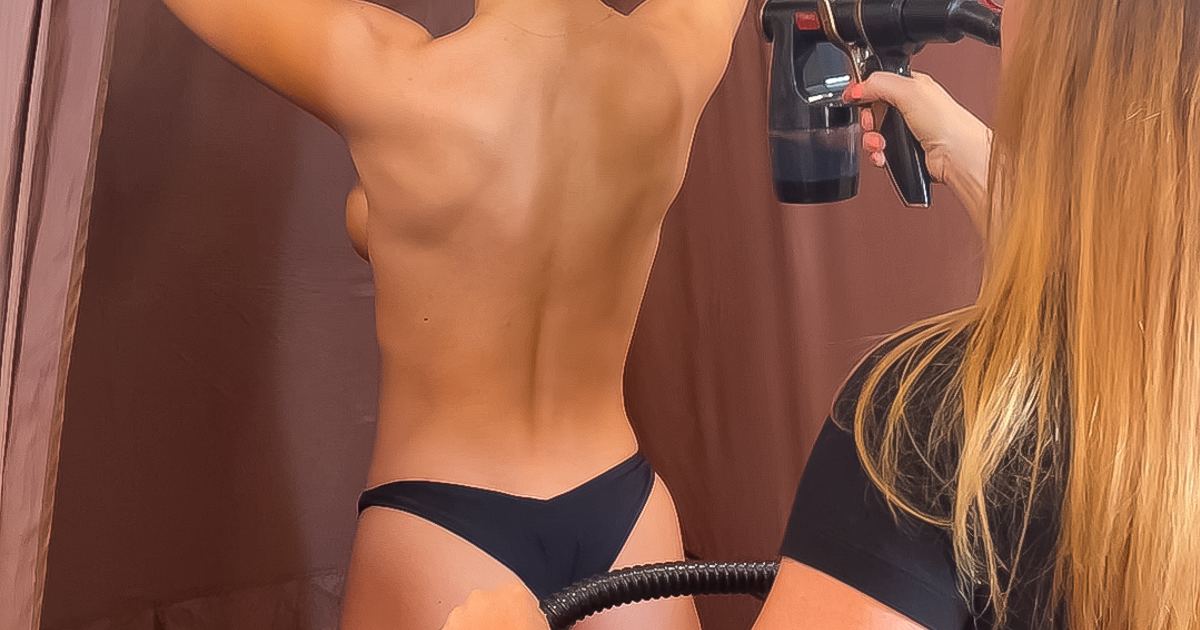
The FDA has not approved the use of DHA in commercial tanning booths as an all-over mist or spray because the industry has not submitted safety data for evaluation. When DHA is dispersed as an airborne mist, avoiding exposure to unapproved areas—such as mucous membranes, lips, the entire eye area, and internal inhalation—becomes very difficult.
Before using commercial spray or misting services, the FDA recommends verifying the following safety precautions:
- Are you protected from exposure in the entire area of the eyes, rather than just the eyeball itself?
- Are your lips and all body surfaces lined with mucous membranes shielded from application?
- Are you protected against internal exposure from accidentally inhaling or swallowing the mist?
If a facility cannot answer "yes" to these questions, the consumer is not protected against unapproved routes of exposure. While the FDA oversees color additive regulations, the direct practice of administering cosmetics in commercial salons is generally regulated by state and local health authorities.
Do Sunless Tanners and Bronzers Protect Skin From Sun Damage?
Sunless tanners and bronzers do not automatically protect skin from ultraviolet light. They only offer photoprotection if they are explicitly formulated with sunscreen active ingredients and carry an assigned Sun Protection Factor (SPF) value on the label. Sunscreens are regulated under federal rules as over-the-counter drugs; products combining cosmetic color with sun-protection claims are regulated as both cosmetics and drugs.
To avoid dangerous confusion, federal regulation (21 CFR 740.19) mandates that any suntanning product lacking sunscreen ingredients must carry this exact warning statement:
"Warning--This product does not contain a sunscreen and does not protect against sunburn. Repeated exposure of unprotected skin while tanning may increase the risk of skin aging, skin cancer, and other harmful effects to the skin even if you do not burn."
What Adverse Events Have Consumers Reported?
Federal regulators have received consumer complaints regarding adverse reactions to sunless tanning products. Reported reactions include skin rashes, as well as symptoms primarily tied to misting booths, such as coughing, dizziness, and fainting. The FDA notes that it remains unclear whether these reactions stem from specific ingredients, allergic sensitivity, or pre-existing health issues.
Under the Fair Packaging and Labeling Act (FPLA), retail cosmetics must declare their full ingredients on consumer packaging. This allows individuals to check for known allergens before purchase. However, the FPLA ingredient disclosure rules do not apply to professional-use products dispensed exclusively inside commercial booths. Anyone experiencing an adverse reaction should seek guidance from a doctor or dermatologist, and reports can be submitted through the FDA consumer complaints process. If you are researching broader legal statuses of tanning compounds, review our analysis on what Melanotan is and its legal status.
Sources
Published October 28, 2026. Sources are linked in the text. See our Medical Disclaimer.