Solar urticaria: when sunlight causes hives within minutes
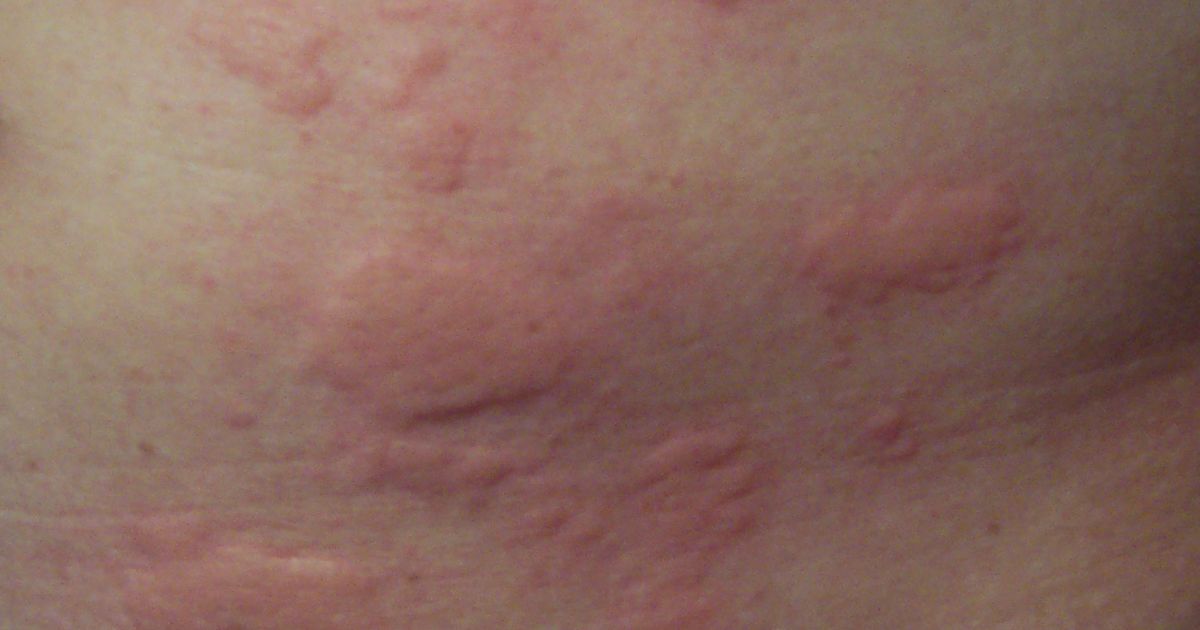
Most sun reactions show up hours later. Solar urticaria is different: itchy welts can appear on exposed skin within minutes, then fade once you're back in the shade. It's rare, but recognizing it matters because the triggers can include visible light, not just UV.
- Solar urticaria is a rare IgE-mediated photodermatosis (a light-triggered allergic skin condition).
- Hives typically appear within minutes of light exposure; the most common triggers are UVA and visible light.
- Diagnosis uses phototesting to find the action spectrum and minimal urticarial dose.
- Sun avoidance is always required; nonsedating antihistamines and light hardening are common options, with omalizumab reserved for severe cases.
What it is
A review in Goetze and Elsner, J Dtsch Dermatol Ges 2015 (PMID 26612794) describes solar urticaria as "a rare IgE-mediated and chromophore-dependent photodermatosis." The exact cause "has, however, not been elucidated."
Symptoms and triggers
Typical features include "the onset of urticarial lesions within a few minutes after light exposure." The most common triggers "are UVA and visible light." Because visible light can be a trigger, ask your dermatologist which protection fits your type.
How it's diagnosed
Dermatologists use phototesting. Finding the "action spectrum as well as the minimal urticarial dose (MDU) is diagnostically crucial." Other photodermatoses, such as polymorphic light eruption or porphyrias, have to be ruled out. A 2023 systematic review in McSweeney et al., J Am Acad Dermatol 2023 (PMID 36796725) pooled published data on the condition's clinical features and natural history.
Treatment
Per the 2015 review, "sunlight avoidance, which is always required," plus options including "nonsedating antihistamines as well as light hardening." Plasmapheresis or the anti-IgE antibody omalizumab are "reserved for severe, recalcitrant forms."
Why it matters for tanning
Anyone who breaks out in hives within minutes of sun should not try to "build a base" or use tanning beds or unregulated tanning products. See a dermatologist for phototesting. See also risks and safety.
Educational information only, not medical advice. See a board-certified dermatologist for diagnosis and treatment. See our medical disclaimer.
Published October 30, 2026. Sources are linked in the text. See our Medical Disclaimer.