Tracking Sunscreen Filter Breakdown: What Urine Biomarkers Show
Understanding how the body absorbs, transforms, and clears topical ingredients is a fundamental part of dermatological science. When people apply products to guard against ultraviolet radiation, active ingredients interact directly with the skin barrier. To evaluate internal exposure under routine circumstances, toxicologists look beyond the surface of the skin to biological fluids. A 2024 investigation published in Toxicology Letters evaluated the breakdown pathways of 2-ethylhexyl salicylate, providing detailed quantitative data on the specific metabolites that appear in human urine following simulated everyday application.
Study Design: Simulating Real-World Sunscreen Exposure
2-Ethylhexyl salicylate, frequently referred to as EHS, is an organic UV filter widely formulated into sunscreens and everyday personal care items. Although the dermal uptake of EHS had been evaluated in earlier dermal-exposure experiments, researchers aimed to build a more coherent profile of how the compound is processed systemically. Rather than relying on theoretical modeling, the investigators examined urine samples collected from 18 participants who had taken part in a pre-existing dermal exposure study designed around real-life conditions.
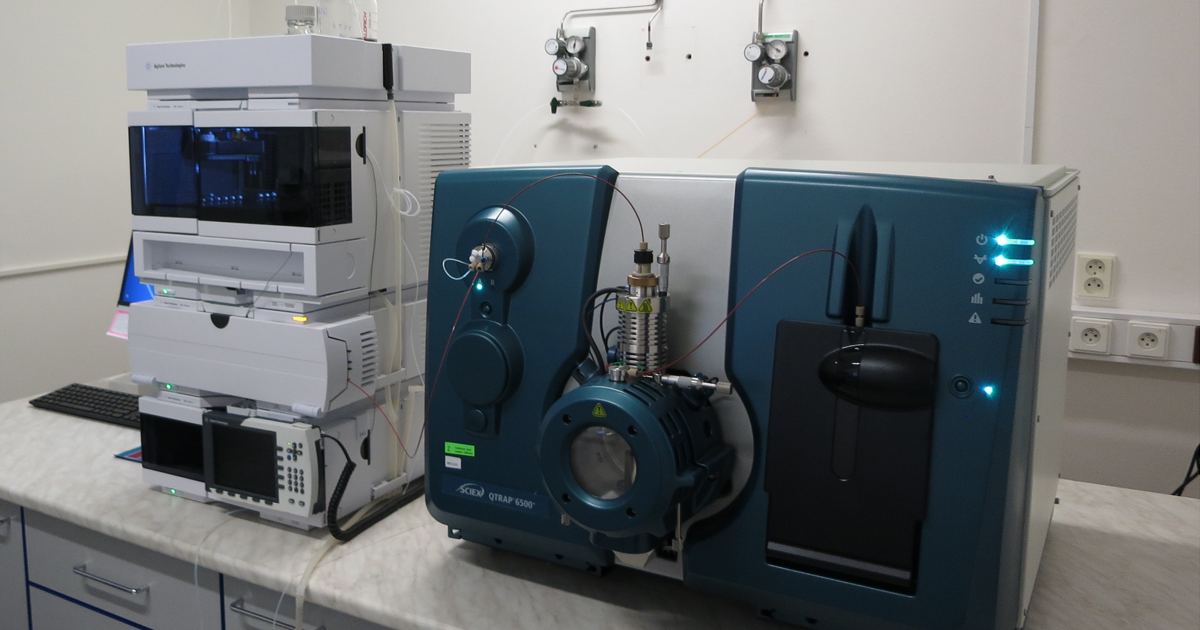
To detect and quantify the chemical remnants of the filter, the laboratory team utilized a comprehensive liquid chromatography-tandem mass spectrometry (LC-MS/MS) method. This analytical setup enabled the team to evaluate known primary biomarkers alongside several newly identified metabolic targets for the first time. By tracking these compounds, the researchers sought to construct an evidence base for ongoing toxicological risk evaluations related to topical application.
What the Study Found: Urinary Excretion Patterns Within 24 Hours
The reassessment of the urine samples revealed that 2-ethylhexyl salicylate undergoes extensive metabolic alteration following skin penetration, while also passing directly into excretion without alteration. In their analysis of sample collections, researchers measured several distinct compounds within 24 h after dermal exposure. The findings showed that parent EHS and five key metabolites accounted for the bulk of eliminated material:
- Unchanged EHS: Represented 34 % of the cumulative excretion of all measured analytes.
- 5OH-EHS: Accounted for 19 % of the cumulative excretion.
- 5cx-EPS: Comprised 18 % of the cumulative excretion.
- 4OH-EHS: Made up 15 % of the cumulative excretion.
- 5oxo-EHS: Contributed 11 % of the cumulative excretion.
Beyond these primary values, additional compounds including 4oxo-EHS, 2OH-EHS, and 6OH-EHS were quantified in minor amounts. The presence of parent EHS as the single most prominent excretion parameter demonstrated the absence of an initial first-pass hepatic effect, a classic feature of dermal absorption compared to ingestion. Furthermore, the analytical procedure mapped exact biochemical transformation sites across the molecule. The authors identified oxidative changes at the main chain of the ethylhexyl group—specifically at the ω position (yielding 5cx-EPS and 6OH-EHS), the ω-1 position (yielding 5OH-EHS and 5oxo-EHS), and the ω-2 position (yielding 4OH-EHS and 4oxo-EHS)—as well as oxidation along the chemical side chain (producing 2OH-EHS).
What the Study Does Not Prove Regarding Health and Safety
While the detection of chemical byproducts provides vital objective data for scientists, interpreting what these findings mean requires scientific context. Demonstrating that an ingredient or its metabolic derivatives can be detected in human urine does not prove clinical toxicity, tissue damage, or systemic illness. The authors of the 2024 study on 2-ethylhexyl salicylate metabolites explicitly noted that their empirical findings serve as essential baseline values to help establish reliable toxicological risk assessments, rather than evidence of an adverse clinical outcome.
Similarly, the study does not prove that consumers should abandon broad-spectrum topical photoprotection. UV radiation remains a primary environmental cause of cellular skin injury. Understanding how regulatory authorities review ingredient data helps contextualize these laboratory findings; readers can explore how the FDA regulates sunscreen ingredients to see how systemic absorption thresholds are monitored. Anyone with questions about specific active ingredients or choosing between physical and chemical formulations should seek individualized guidance from a board-certified dermatologist.
Methodological Limits and the Context of Unregulated Products
When assessing this research, readers should keep the scope of the trial in mind. The dataset stems from a single study reassessing samples from 18 participants over a 24 h observation window. Because human metabolism and skin barrier properties vary, larger populations across longer monitoring intervals would be necessary to capture broader statistical ranges. These constraints are standard in early-phase metabolic profiling, which prioritizes precise chemical detection over epidemiological scale.
This careful scientific tracking of topical UV filters stands in stark contrast to the illicit market for unlicensed tanning substances. While commercial cosmetic filters undergo continuous academic and institutional evaluation, unapproved peptide products like melanotan I and melanotan II are distributed online without standard regulatory oversight, rigorous testing, or defined human metabolic profiles. Consumers researching photoprotection can review standard sunscreen basics and broad-spectrum filters and consult healthcare professionals for safe, evidence-based sun-defense strategies.
Sources
Published October 31, 2026. Sources are linked in the text. See our Medical Disclaimer.